Level of blast resistance
The nature of attacks have changed over time. More and more attacks start with an explosion – it is estimated - that in 2012 more than a half of ballistic attacks started with a blast.
Bombs are often detonated in crowded places – in countries like Iraq and Afghanistan blast attacks are common – so sitting in a top quality blast-resistant vehicle is the only way to maximize the chances of survival. Bombs carried by suicide attackers usually do not exceed 15 kg of explosive; a correctly armored vehicle can sustain that, yet vehicles from the majority of the manufacturers would give little chance of survival.
SEVERAL ASPECTS OF ARMORING DESIGN ARE EXTREMELY IMPORTANT TO ENABLE A VEHICLE TO WITHSTAND BLASTS:
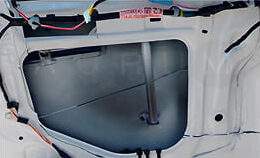
The vast majority of manufacturers complete the armoring of the doors in the same way – by placing several plates of armor steel inside the door.
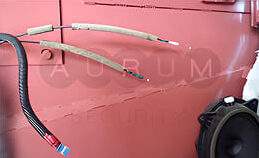
The problem is, -that there is no way such a door would withstand any serious side explosion – the welding, especially stitch-welding, simply cannot hold plates together strongly enough, so during the first milliseconds of an explosion these plates would detatch and fly inside the vehicle.
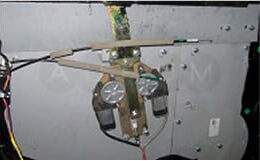
Obviously even a weak blast wave will tear such a structure apart. Besides that, bolts and joints expose additional ballistic gaps.
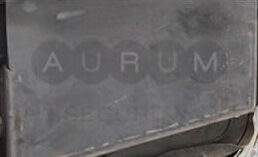
Armoring using only one armor plate – this is how it should be constructed.
Needless to say this is the only way that we armor doors
Very few manufacturers bother to replace or reinforce the door frames – they just install bullet-proof glass into the standard frames:
Although it is the fastest and the easiest way of installing bullet-proof glass, the problem is the same – such doors cannot withstand any significant side explosion – the standard frame is not designed to hold a blast wave, and the bullet-catchers in the doors frames cannot alleviate the situation.
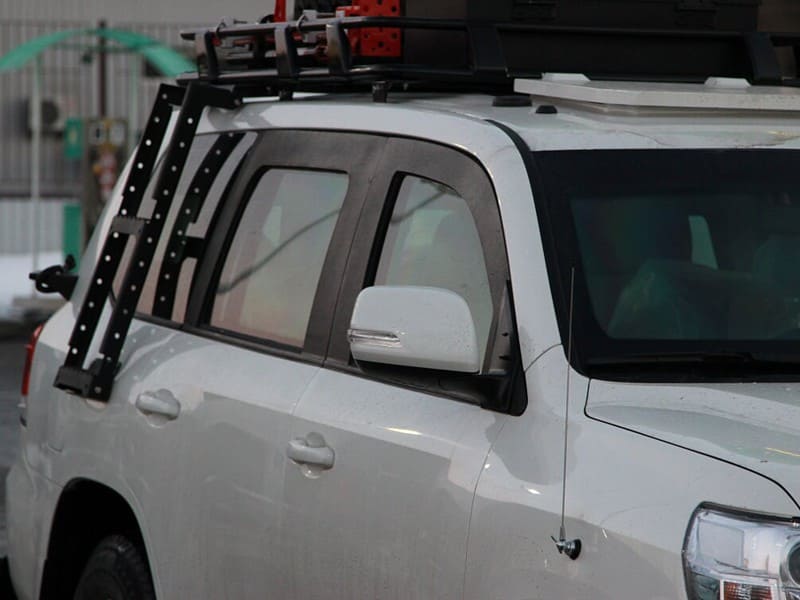
The drawback of reinforced door frames is that as a rule they look very massive so it is obvious that the vehicle is armored. The reason for this is that nearly all manufacturers reinforce the frames from the outside
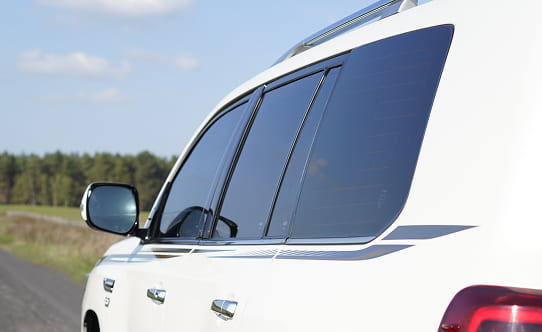
In our vehicles the frames are installed inside so the exterior of the vehicle does not differ much from the standard one.
Nearly all manufacturers use small plates of “mosaic” form, welded to each other, when a complex surface like a firewall should be properly armored. And only a few manufacturers in the world use the technology of hot-forming armor steel. This technology allows parts from armor steel to be manufactured exactly in the shape needed
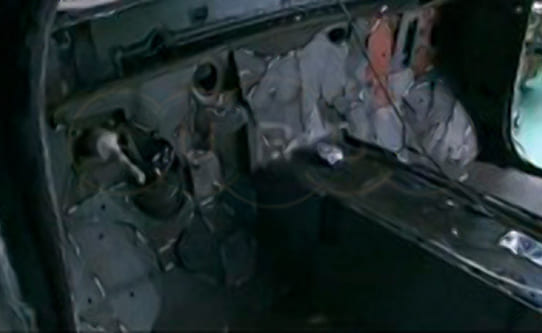
The drawback of reinforced door frames is that as a rule they look very massive so it is obvious that the vehicle is armored. The reason for this is that nearly all manufacturers reinforce the frames from the outside.
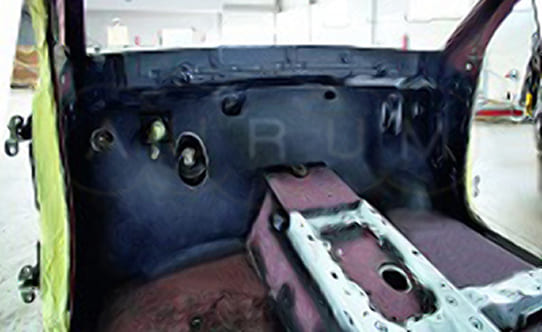
In our vehicles the frames are installed inside so the exterior of the vehicle does not differ much from the standard one.
An armored door is much heavier than an original one, so the door hinges must be reinforced. In most cases, the following methods of reinforcing door hinges are used:
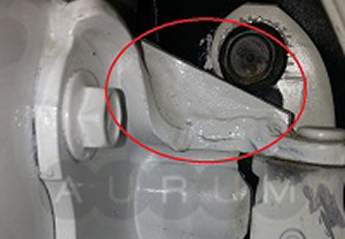
Although this solution is very cheap it has two significant drawbacks:
- the time the door starts trembling as some parts of the hinges remain not reinforced;
- a significant blast can simply tear the door away – standard hinges are not designed to have high tensile strength.
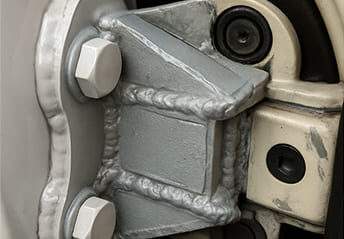
Another common solution is to use hinges welded from several plates. Such hinges are free from the first issue – usually they are robust enough to hold the weight of the door – but still cannot keep the door during the impact of the blast wave.
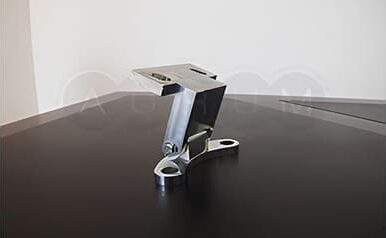
To overcome both these problems a hinge should be milled from a single piece of steel.
Such hinges are more expensive than welded ones but only they can hold the doors during a significant blast.
Three people including Pakistan Chief of Security were killed on 10th of July, 2013 after a suicide bomber attack.
The explosion was not strong – there was no crater on the road, the wheels were not damaged (in case of a strong explosion the blast wave pushes the vehicle away so fast that wheels come away from the tires), the standard body was not pulled down.
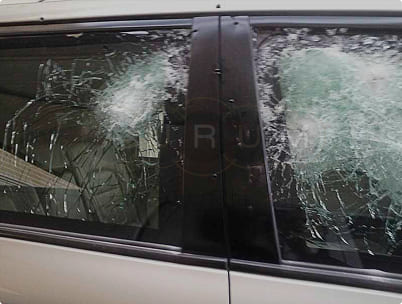
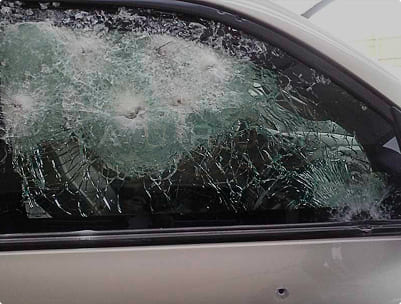
Nevertheless this vehicle failed to protect its passengers, which is not surprising considering the nature of the damage to the vehicle:
- the glasses were blown away – apparently they were not fixed appropriately
- one door was torn away completely – the hinges did not withstand the load
- the armor just fell out of the doors
The passengers would not have died if this vehicle had had a proven protective cocoon
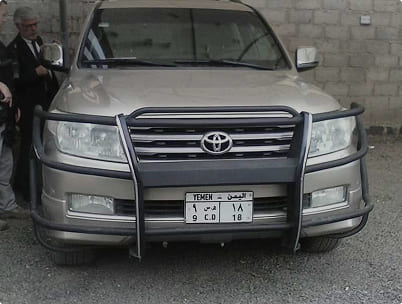
During the testing and certification in Germany our vehicle withstood the following blasts – you can see videos here.
There would be no injuries to the occupants of the vehicle. This blast imitates a driving over an anti-tank mine and is the most serious test for vehicles. As of 2013 there are only a few companies in the world whose vehicles under 8 tons could sustain such a blast.
There would be no injuries to the occupants of the vehicle. This blast imitates a roadside improvised explosive device (IED) – a common threat in many countries of Middle East and Africa. A directional blast at 2 m is much stronger than non-directional at 4 m – you can see more information here.
There would be no injuries to the occupants of the vehicle.
There would be no injuries to the occupants of the vehicle. This exceeds BRV 2009 requirements, which define a blast of 2 hand grenades.
There would be no injuries to the occupants of the vehicle. This exceeds BRV 2009 requirements, which define a blast of 2 hand grenades.
You can see more details on different blast protection levels here.
The certification has confirmed that our vehicles provide fully reliable protection. There are only a couple of companies in the world who are able to produce armored vehicles with this level of protection against blasts.
Our vehicles provide the maximum level of protection available for civilian vehicles.
Contact
Contact us — we will help you find the best protection solution
65830 Kriftel,
Germany